A pioneering NIHR ARC: East of England study, Adapt-Ed Nourish, is exploring food provision in special schools with the aim of reducing health inequalities and improving the health and wellbeing of children and young people with special educational needs and disabilities (SEND).
Children with special educational needs and disabilities (SEND) are missing out on Universal Infant Free School Meals, with one in five in special schools not receiving them, compared to one in eight in mainstream schools. Children with SEND face increased risks of malnutrition and living in poverty, making this disparity a serious concern for their health. Schools play an important role in providing nutritious meals and supporting healthy eating habits.
Funded by the NIHR and led by the University of Hertfordshire, the Adapt-Ed Nourish study will work with staff, parents, children and young people at three SEND schools in Hertfordshire to identify priorities for change around food in special school settings, and then assess whether those changes can be delivered in a sustainable way.
The research team hopes to trial the intervention with a larger group of special schools to demonstrate how the right school food environment can reduce rather than exacerbate health inequalities, helping to create healthier, more inclusive school environments and ensuring more children can access and benefit from nutritious meals and government investment in school food provision.
Rebecca O’Connell highlights the importance of the study:
A whole school approach means not just focusing on lunchtime but on food across the school day and across the different domains of the school. So, it means thinking about school food policies and food education as well as food provision and trying to create more consistency between them. It also means involving the whole community – pupils, parents and staff – in the school’s approach to food.
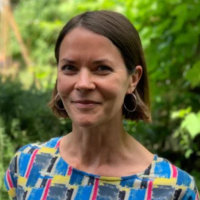
Rebecca O’Connell
Principal Investigator of the Adapt-Ed Nourish study and NIHR ARC: East of England researcher
In collaboration with school professionals, children with SEND, and their families, the intervention model builds on Nourish, an existing whole school approach to food developed and delivered by charity School Food Matters that supports schools to create a food environment that puts children’s and young people's nutrition first. Hertfordshire County Council is funding School Food Matters to deliver the tailored version of the programme in the three Hertfordshire special schools involved in the study over the next two and a half years as part of its Public Health Prevention Investment Programme.
Georgie Branch, Head of Nourish at School Food Matters, added: "Through our Nourish work in schools across England, we've seen how the right food environment can transform children's experiences at school."
Adapt-Ed Nourish gives us a unique opportunity to work with special schools, pupils and families to adapt our whole school approach so it reflects their experiences and meets their needs. By identifying practical, sustainable changes that schools can embed across the school day, we hope to help ensure every child can access and benefit from nutritious school food.
Georgie Branch
Head of Nourish, School Food Matters
The Adapt-Ed Nourish project was informed by the pilot Adapt-Ed study, which co-developed adaptations to a whole-school food approach that integrates food education with accessible, nutritious eating in schools. The project found a lack of guidance and considerable variation in how special schools implement food provision. Small changes, such as offering accessible foods that avoid triggering sensory sensitivities and gradually introducing new foods, can increase access to school meals, improve mental health and encourage positive behaviour. The study’s findings were presented to the All-Party Parliamentary Group on School Food, which acknowledged the need to improve access to nutritious meals for all children.
The project has built strong relationships with children and young people with SEND, whose involvement has been central to the research. This collaboration has already led to a podcast and museum exhibit featuring their perspectives and experiences, with a short film due to follow in the New Year. The findings will be shared more widely through a new virtual network of practitioners and policymakers, with the aim of improving school lunchtimes and the wider school experience for children with SEND wherever they learn, including in mainstream settings.
For children and young people with SEND, preparing for adulthood and independence are core parts of their learning, and food and eating are obviously central to that – from growing food and shopping, to eating out and the social skills that are established. So special schools recognise food as a multi-dimensional phenomenon in ways that other types of schools may not.

Dr Amanda Ludlow
Co-Project Lead of the Adapt-Ed Nourish study and NIHR ARC: East of England researcher
The UK government, through its guidance on School food in England, recommends schools adopt a whole school approach to food. Research and policy highlight its potential to support uptake of school meals as well as wider benefits around social skills, behaviour, attendance, and household budgets. However, interventions and studies around food provision and healthy eating have previously focussed predominantly on mainstream schools. Adapt-Ed Nourish is believed to be the first whole school model tailored for a special school context.
The project is working with researchers from the University of Essex, the University of East Anglia, City St George’s and Aberystwyth University, as well as School Food Matters. The study will run until March 2029 and will assess the feasibility and effectiveness of delivering Adapt-Ed Nourish in special schools.