
An ARC East of England study developed an educational resource to help clinicians, family members, and carers better support people living with breathlessness caused by chronic obstructive pulmonary disease and cancer. Created in partnership with family carers and experts in breathlessness, the resource provides practical advice and guidance for those supporting someone living with the condition.
Clinicians can request mock ‘prescription pads’ to help signpost carers to the Supporting Breathlessness resource. See further details below.

Breathlessness is a common distressing symptom of advanced conditions, including cancer and Chronic Obstructive Pulmonary Disease (COPD). It can have a significant impact on the wellbeing of both patients and carers, affecting quality of life and the ability to provide care. In cancer, breathlessness is the second most common symptom after pain, affecting nearly half of all patients. Despite its prevalence, patients, family members and carers often receive limited guidance on how to manage breathlessness effectively and comfortably. The Supporting Breathlessness website was developed to address this gap for unpaid family carers.
Funded by the NIHR Research for Patient Benefit programme and supported by NIHR ARC East of England, a research team from the University of East Anglia (UEA) developed an innovative online resource to help carers better understand breathlessness and feel more prepared, confident and supported in their role. It also provides healthcare professionals with a trusted, evidence-based resource that they can recommend to carers to support them in caring for someone with breathlessness.
Professor Morag Farquhar, Lead of the ARC East of England's Palliative and End-of-Life Care theme and Principal Investigator of the study, shares the background to the study: “Family members and friends often take on demanding caring roles, providing practical help, emotional support and overnight care, but many feel unprepared for these responsibilities.
We developed the resource because there was nothing else like it available. At the time, there were few evidence-based interventions for carers, including limited support to help carers develop practical skills for caring for people with cancer, no evaluated interventions for carers of patients with chronic lung disease, and no educational resources focused on breathlessness in advanced disease.
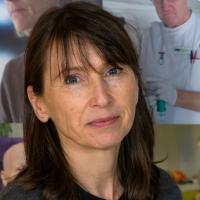
Professor Morag Farquhar
Theme Lead of the Palliative and End-of-Life theme and Principal Investigator
The Supporting Breathlessness website is the first resource of its kind to be developed with carers, patients and clinical experts in breathlessness, based on what carers said they needed to know and how they wanted to access information. It provides practical, evidence-based guidance on topics such as understanding breathlessness, managing stress and panic, staying active, preventing infections, and planning for the future.
The website includes short videos from clinical experts and carers, links to additional support organisations, printable leaflets, and downloadable resources for healthcare professionals. The website also features downloadable ‘mock prescription pads’, developed in response to carer feedback, enabling healthcare professionals to signpost and ‘prescribe’ the resource. Clinicians can request printed prescription pads to help connect carers with this resource (information below).
I like the topics [on the website]. It’s not just managing the symptom but the stress, panic, keeping active and living a positive life.
Anonymous, COPD Clinician
You can only benefit from it. It’s important for people who are looking after their partner or wife or an elderly family member to understand what to do […] and how to help as best as possible [the Supporting Breathlessness website] is invaluable for that.
Anonymous, Carer
[The Supporting Breathlessness website] feels very professional… [it] makes you feel this is a safe, professional website that I can trust.
Anonymous, Cancer Clinician
[The Supporting Breathlessness website] does offer something which the others don’t which is it is a carer-focused […] it looks more at I suppose the social and relational aspects of being in this situation which is useful.
Anonymous, Carer
The resource is shaped by findings from an earlier study, which was funded by Dimbleby Cancer Care. In this early work, researchers worked closely with carers, patients and clinical experts to identify and understand what carers of people living with breathlessness in advanced disease wanted to learn about the symptom and how they preferred to learn it. The study directly informed the development of the resource. The subsequent study developed the website, working with people with lived experience, carers, and clinical experts from Cambridge University Hospitals NHS Foundation Trust, The Hicks Group Practice, and researchers from the Universities of East Anglia, Cambridge, Southampton, and Manchester.
To date, the website has been used by clinicians, unpaid family carers, and researchers nationally and internationally. It has been endorsed by organisations including the NHS Shortness of Breath webpage, the Queen's Nursing Institute, and the Respiratory Futures. The resource has also been used in undergraduate and postgraduate clinician education and training. Its online format and evidence-based content make it an accessible learning resource and a practical tool for remote support and intervention.
To access the Supporting Breathlessness website, click here.
To request Supporting Breathlessness ‘mock prescription pads’, please contact Pel Fordham via email at P.Fordham@uea.ac.uk and provide your name and address.
