The DiTSoW II (Digital Technologies to Support Social Wellbeing) study has published a research briefing highlighting the value of digital technologies for older people with vision impairment and sharing recommendations to help professionals, policymakers and community organisations support equitable digital inclusion.
Vision impairment affects around one in nine people aged over 60 and one in five people aged over 75. As well as impacting daily life, it can affect social wellbeing and increase the need for additional social care support. The Department of Health and Social Care aims to increase the use of digital technologies across health and care services to support older people to live independently and receive more personalised support. However, in the East of England, 36% of blind and partially sighted people never use or cannot access the internet, compared with the UK average of 10%. Understanding these challenges is key to ensuring that the benefits of digital technology are accessible to everyone.
To address this, DiTSoW II explored the barriers and enablers to digital technology use among people aged over 60 with vision impairment. Through surveys and focus groups older people with vision impairment were consulted about if, and how, they use digital technologies to enhance their wellbeing as well as the enablers and barriers of this. DiTSoW II built on findings from the original DiTSoW study.
Professor Kathryn Almack shares the background to the project: "The DiTSoW study began during the COVID-19 pandemic, when older people and care providers were increasingly turning to digital solutions to stay connected and support care packages.
As technology became increasingly more important in health and social care, we wanted to understand how it could improve quality of life and wellbeing within the context of social care. More recently we focused on people with vision impairment recognising this as an underserved population.
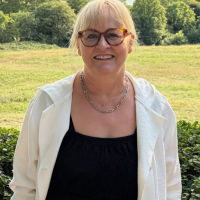
Professor Kathryn Almack
Theme Lead of ARC East of England Social Care, Dementia and Ageing theme and Principal Investigator of the DITSoW II study
The DiTSoW study has produced four research reports to date. The latest briefing shares the barriers and enablers to technology use for older adults with visual impairment, with findings informed by more than 200 stakeholders. The research found that digital technologies can play a meaningful role to support independence, wellbeing and social connection. However, for technology to be effective, it must be accessible, affordable, and supported by personalised, ongoing training from people who understand both technology and vision impairment.
The briefing presents a series of co-produced recommendations to improve digital inclusion and accessibility, including:
- Maintaining non-digital routes to services: Digital technologies should be implemented to complement, not replace, human support and equitable non-digital routes to access services must be maintained.
- Improving access to information and data: Timely and proactive signposting to services and technologies can support wellbeing and independence and reduce the need for additional intervention. Accessible information should be routinely provided at all key touch points, including hospital appointments, eye clinics and health or social care contacts.
- The need for effective training for people with vision impairment: Access to appropriate, ongoing and person-centred training is critical to successful technology use and needs to be delivered by people who understand both technology and vision impairment.
- Involving people with vision impairment in the design and delivery of technologies and services: Services that incorporate digital technology should be shaped by people with vision impairment, so that technologies and services better meet their needs.
- Technology should be accessible: Existing accessibility guidelines should be consistently applied by designers, developers and commissioners. Accessibility features should be considered and embedded from the outset of design.
People with vision impairment and representatives from vision loss charities were involved throughout the study, helping to shape the research and ensure the findings reflected real-world experiences. Accessibility was also central to the development of the final briefing, with larger fonts, appropriate colour contrast, screen-reader-friendly formatting and audio descriptions. The findings provide important evidence to support the NHS, social care organisations and charities in implementing digital technologies in ways that better meet the needs of people with vision impairment.
Collaboratively shaping this work showed me how much can be learned when people with vision impairment are listened to. We have a clearer understanding of the barriers, but also of the real value digital technology can bring to wellbeing and independence. The challenge now is to turn that evidence into action, so that people with vision impairment help shape services and are not left behind.
Raj Mehta
Public Contributor with Vision Impairment
The final briefing has been shared with study participants, national and local vision impairment charities, and professionals working in social care, sensory services and digital inclusion. By raising awareness of the study's recommendations, it has the potential to improve digital inclusion for people with vision impairment and inform the development of more accessible services. The findings also highlight the importance of involving people with lived experience in the design of technologies and services, helping to ensure they are more inclusive, relevant and effective.
The project has also produced a series of co-created audio clips featuring people with lived experience of vision impairment, sharing how they use digital technologies and what helped them get started.
A key finding of our research was the importance of peer support for older people living with vision impairment. Participants emphasised the value of learning from others with shared experiences and gaining first-hand insights into how technology can support independence, wellbeing, and social connectedness.

Dr Alison Tingle
Researcher in the DiTSoW II Study
Dr Alison Tingle continues: "In response, we co-created a series of accessible audio clips that share real-life experiences of technology use, explore why these technologies matter, and offer practical guidance for those interested in getting started."
Funded by the NIHR, DiTSoW was one of four priority topic areas identified by the National Priorities Programme for Adult Social Care and Social Work, which brought together nine ARCs across England. DiTSoW established its own public involvement group in 2022, initially consisting of six members and expanding to eight in late 2024. Members were recruited through local community groups and Shaping Our Lives, a public involvement charity.
The first DiTSoW study produced three research reports exploring how professionals across health, social care and the voluntary sector use digital technologies to support older people, older people's experiences of technology, and stakeholder recommendations to inform future policy and practice. The reports highlighted the importance of digital inclusion, collaborative technology design and effective implementation.
Access the audio for this briefing descriptions here:
Access the other briefing documents here
Access the audio clips here:
To learn more about the DiTSoW studies, see the research project pages below: