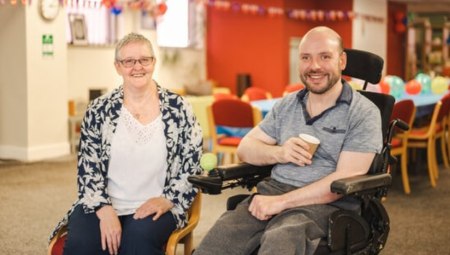
ARC East of England Family Carer Research Network (ACORN) is a regional network that brings together researchers, carers, and professionals to promote carer-inclusive research and build capacity for impactful studies that support unpaid carers across the East of England.
Background
Unpaid carers – family members, friends, and neighbours who support someone with illness, disability or frailty – play a vital role in the health and social care system. In the UK, there are around 5.7 million unpaid carers, providing care worth an estimated £162 billion per year – almost equal to the annual cost of the NHS. Despite their crucial contribution, carers often experience poor physical and mental health, financial strain, and social isolation. Research on carers is growing, but carers themselves are still underrepresented in shaping research priorities, design, and delivery. ACORN was created to address this gap by building regional capacity for carer-inclusive and carer-led research, ensuring that research better reflects carers’ experiences and informs improvements in policy and practice.
Project Aims
ACORN aimed to
- Promote the inclusion of unpaid carers and carer perspectives in health and care research.
- Support and connect researchers, practitioners, and carers to develop impactful, co-designed research.
- Build skills and capacity among members to undertake carer-related and carer-inclusive studies.
- Deliver locally relevant, member-prioritised projects that address gaps in evidence (for 2025, the focus is on young carers).
Project Activity
- Mapped and understood the landscape of carer research in the East of England, identifying gaps and opportunities for collaboration.
- Capacity building through workshops, networking events, and mentoring to help members develop and lead co-produced research.
- Supported co-designed funding bids, encouraging inclusive and interdisciplinary research applications that involve carers from the outset.
- Delivered a member-prioritised regional research project – in 2025, focused on improving understanding and support for young carers.
- Showcase events and communication activities to share learning, connect researchers and carers, and raise the profile of carer-inclusive research.
Outputs
Outputs
- A clearer picture of existing carer-related research and gaps in the East of England.
- Increased number and diversity of co-produced research proposals involving carers.
- A completed locally relevant research project on young carers.
- Capacity-building resources and events to sustain carer-inclusive research practice.
Impact:
- Improved inclusion of unpaid carers in health and social care research, ensuring their voices shape priorities and outcomes.
- Stronger regional networks between carers, researchers, and service providers.
- Evidence to inform policy, commissioning, and workforce development, ultimately improving support for carers’ wellbeing and their ability to sustain their caring role.
Who was involved?
- Lisa Franks, PI, University of East Anglia
- Kristy Sanderson, University of East Anglia
- Allison Bentley, University of East Anglia
- Morag Farquhar, University of East Anglia
- Fiona Poland, University of East Anglia
- Elspeth Mathie, University of Hertfordshire
- PPI (various)
Contact
Lisa Franks, Lisa.Franks@uea.ac.uk